
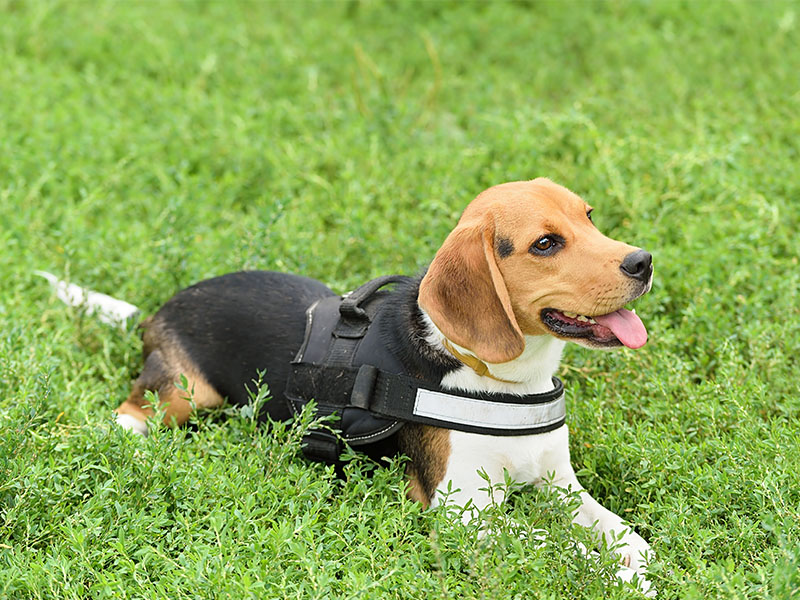
Imerslund-Gräsbeck Syndrome (IGS) is a rare but recognized inherited disorder affecting beagles and a few other dog breeds. Also known as selective cobalamin (vitamin B12) malabsorption with proteinuria, this condition results in the body’s inability to properly absorb vitamin B12 from the intestines, leading to a range of clinical problems.
What is Imerslund-Gräsbeck Syndrome?
IGS is named after the physicians Imerslund and Gräsbeck, who first described a similar disorder in humans in the 1960s. In affected beagles, the small intestine is unable to take up cobalamin (vitamin B12) despite it being present in the diet. This occurs because of a genetic mutation that disrupts the cubilin–amnionless receptor complex on intestinal cells, which normally binds and transports cobalamin bound to intrinsic factor.
How it Occurs in Beagles
IGS in beagles is inherited as an autosomal recessive disorder. This means a dog must inherit two defective copies of the gene (one from each parent) to show clinical signs, while dogs with only one defective gene are carriers without obvious illness.
The specific mutation responsible in beagles has been identified in the AMN gene, which encodes the amnionless protein, a key part of the receptor needed for vitamin B12 absorption.
Clinical Signs
Vitamin B12 is essential for red blood cell production and normal nervous system function. In affected beagles, symptoms typically start to appear between 6 and 12 weeks of age, including:
- Poor growth and stunted development
- Loss of appetite and intermittent vomiting
- Weakness and lethargy
- Pale gums due to anemia
- Sometimes neurologic signs, like unsteadiness or tremors
Another hallmark of IGS in dogs is proteinuria (protein in the urine), which occurs even when there is no kidney disease. This is due to a mild defect in the kidney’s ability to reclaim filtered proteins.
Treatment and Management
Although there is no cure for the genetic defect itself, IGS in beagles can be effectively managed with regular supplementation:
- Parenteral vitamin B12 injections (usually once every 1–4 weeks) bypass the defective absorption in the intestine
- Some dogs may respond to high oral doses of vitamin B12, though injections are generally more reliable
With lifelong treatment, affected dogs often lead normal, healthy lives.
References
Fyfe, J. C., Hemker, S. L., Venta, P. J., Stebbins, M. E., & Outerbridge, C. A. (2004).
Selective intestinal cobalamin malabsorption and proteinuria in juvenile Beagles. Journal of Veterinary Internal Medicine, 18(1), 109–118.
Fyfe, J. C., & Giger, U. (2007).
Inherited selective cobalamin malabsorption in dogs and cats. Veterinary Clinics of North America: Small Animal Practice, 37(3), 539–549.
He, Q., Fyfe, J. C., & Giger, U. (2003).
Identification of a mutation in the canine AMN gene in Imerslund-Gräsbeck syndrome in dogs. Genomics, 81(6), 559–564.
Kook, P. H., & Grest, P. (2019).
Selective cobalamin malabsorption (Imerslund–Gräsbeck syndrome) in dogs and cats. Topics in Companion Animal Medicine, 34(1), 6–10.
Fyfe, J. C. (2016).
Inherited selective cobalamin malabsorption in dogs: molecular genetics and pathogenesis. Animal Genetics, 47(1), 23–29.
Online Mendelian Inheritance in Animals (OMIA). (2025).
Imerslund–Gräsbeck syndrome in dogs. OMIA entry for Canis familiaris – OMIA000492.
Watson, A. D. J., & Fyfe, J. C. (1995).
Inherited selective intestinal cobalamin malabsorption and proteinuria in Beagles. Australian Veterinary Journal, 72(2), 73–77.
Giger, U., & Saker, K. (2003).
Cobalamin deficiency in dogs. Compendium on Continuing Education for the Practicing Veterinarian, 25(11), 862–870.