
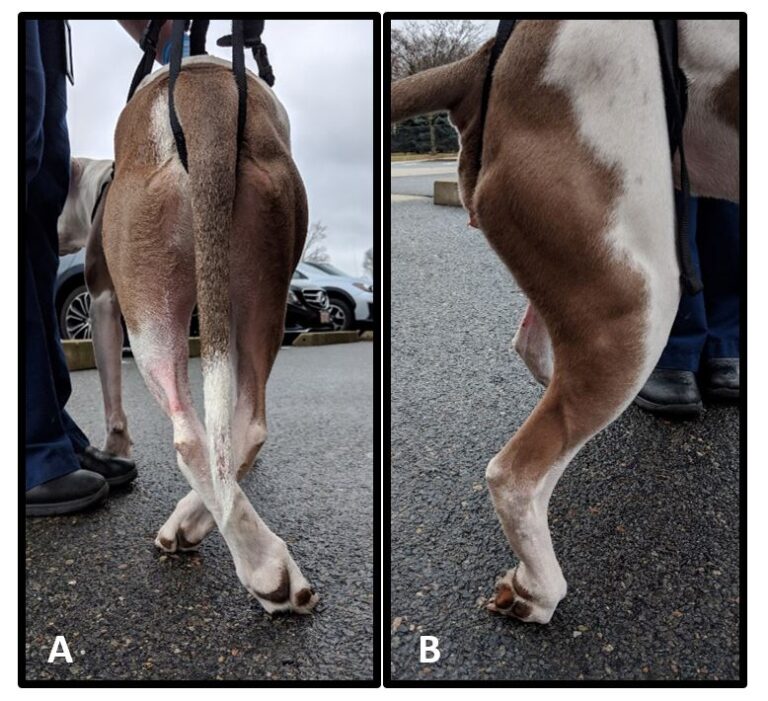
Degenerative Myelopathy (DM) is a serious spinal cord disease that affects many dog breeds, including Beagles. Although it is more famously associated with breeds like the German Shepherd, Beagles can also inherit this progressive and ultimately fatal condition. Understanding DM helps Beagle owners recognize early signs, make supportive care decisions, and work with breeders to reduce its prevalence.
What is Degenerative Myelopathy?
DM is a progressive disease of the spinal cord, usually affecting middle-aged to older dogs (commonly over 8 years of age). It is caused by the degeneration of the white matter in the spinal cord, which is essential for transmitting nerve signals between the brain and the rest of the body.
The disease is somewhat similar to amyotrophic lateral sclerosis (ALS) in humans. It gradually causes weakness and paralysis in the back legs, and eventually can affect the front legs and other muscles.
Signs and Symptoms
In Beagles, the first sign is often a subtle weakness or wobbliness in the hind legs. Owners might notice:
- Difficulty rising from lying down
- Dragging of the paws, sometimes wearing down the nails
- Stumbling or crossing of the hind legs while walking
- A swaying or “drunken” gait in the back end
As the disease progresses, the weakness becomes more severe. Dogs eventually lose the ability to walk and may become incontinent. Importantly, DM is usually not painful, although the loss of mobility significantly affects the dog’s quality of life.
Treatment and Care
Sadly, there is no cure for DM. However, supportive care can improve a dog’s comfort and slow progression:
- Physical therapy and exercise to keep muscles strong
- Assistive devices such as slings, harnesses, or dog wheelchairs
- Maintaining a healthy weight to reduce strain on the back legs
Owners often find that Beagles with DM remain mentally alert and happy even as mobility declines, which makes end-of-life decisions especially difficult and deeply personal.
Living with a Beagle with DM can be challenging, but many families successfully adapt by making small changes—adding non-slip mats, using ramps, and helping their dog stay active in safe ways. Support groups and veterinarians can offer practical tips and emotional support.
While Degenerative Myelopathy is a devastating disease, early recognition and supportive care help affected Beagles stay happy for as long as possible. Genetic testing offers hope for reducing the number of dogs affected in the future, so Beagle lovers and breeders alike can work together to protect the breed.
References
Awano, T., et al. (2009).
Genome-wide association analysis reveals a SOD1 mutation in canine degenerative myelopathy that resembles amyotrophic lateral sclerosis.
Proceedings of the National Academy of Sciences, 106(8), 2794–2799.
↳ Found the SOD1 mutation responsible for DM, including in Beagles.
Zeng, R., et al. (2014).
Canine degenerative myelopathy: SOD1 mutation distribution, breed susceptibility, and allele frequency in 222 breeds.
PLoS ONE, 9(4): e88233.
↳ Documented DM mutation carrier and affected rates, including Beagles.
Coates, J. R., & Wininger, F. A. (2010).
Canine degenerative myelopathy.
Veterinary Clinics of North America: Small Animal Practice, 40(5), 929–950.
↳ Comprehensive review of DM clinical signs, diagnosis, progression, and supportive care.
Coates, J. R., et al. (2007).
Degenerative myelopathy in dogs: clinical features and pathogenesis.
Journal of Veterinary Internal Medicine, 21(5), 1013–1020.
↳ Discusses the similarities to ALS and describes typical age of onset and progression.
American Kennel Club Canine Health Foundation (AKC-CHF).
Degenerative Myelopathy in Dogs (Web article).
↳ Plain-language summary of DM genetics, testing, and management.
Orthopedic Foundation for Animals (OFA).
Degenerative Myelopathy DNA Test Information.
↳ Breed-specific mutation test details, including testing recommendations for Beagles.
Platt, S. R., & Olby, N. J. (2013).
BSAVA Manual of Canine and Feline Neurology (4th ed.). British Small Animal Veterinary Association.
↳ Practical clinical neurology text covering DM diagnosis and management.
Smith, P. M., & Jeffery, N. D. (2006).
Histopathological features of canine degenerative myelopathy: comparison with human ALS.
Journal of Comparative Pathology, 134(1), 67–81.
↳ Histology showing spinal cord degeneration patterns in DM.