
Progressive Retinal Atrophy (PRA) is an inherited eye disorder that affects many dog breeds, including beagles. It causes the gradual degeneration of the retina, the light-sensitive tissue at the back of the eye, eventually leading to blindness. While PRA cannot be cured, understanding the disease, its inheritance, and its signs helps breeders reduce its occurrence and helps owners care for affected dogs.
What is PRA?
The retina contains two main types of cells: rods, which help dogs see in low light, and cones, which help with colour vision and seeing in brighter light. PRA causes these cells to degenerate over time.
There are different forms of PRA:
- Early-onset PRA (also called retinal dysplasia): retinal cells do not develop properly from birth.
- Late-onset PRA (also known as progressive rod-cone degeneration, PRCD): retinal cells develop normally at first, then start degenerating later in life.
In beagles, the late-onset PRCD form is the type most commonly reported. It usually appears in adult dogs, typically between 3 and 6 years of age.
Clinical Signs
Because PRA affects vision gradually, the first signs can be subtle:
- Difficulty seeing in dim light (night blindness).
- Hesitation when going down stairs or entering dark rooms.
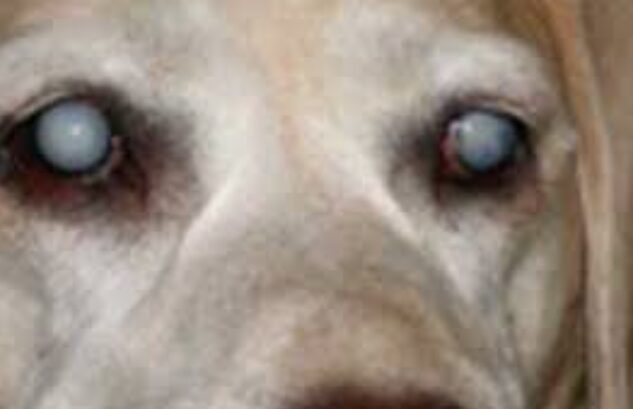
- Dilated pupils and a shiny or reflective appearance of the eyes.
- As the disease progresses, dogs lose vision in bright light too and eventually become completely blind.
Dogs often adapt remarkably well by relying on their sense of smell and hearing, so owners may not notice blindness until it’s advanced.
Diagnosis
Veterinarians can diagnose PRA using:
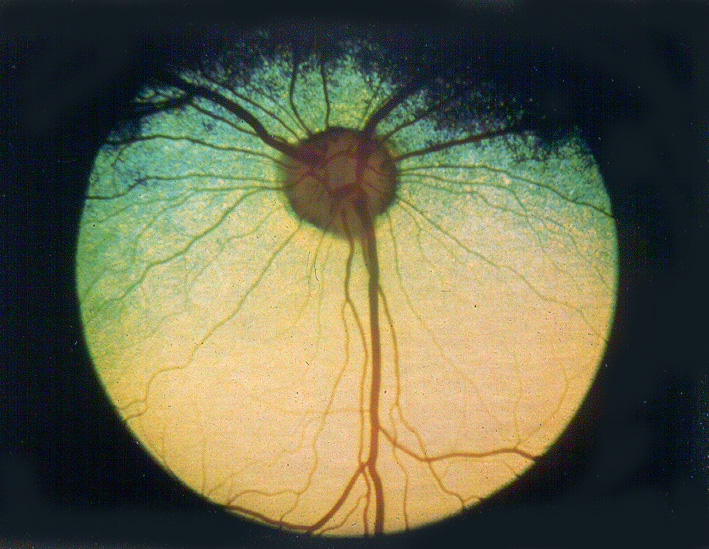
- Ophthalmic examination: signs like thinning of retinal blood vessels and changes to the optic nerve.
- Electroretinography (ERG): measures the retina’s electrical response to light and detects PRA before vision loss is obvious.
- Genetic testing: in beagles, there is a known mutation associated with PRCD that can identify affected dogs and carriers.
Inheritance
PRA in beagles is inherited as an autosomal recessive trait:
- A dog must inherit two copies of the defective gene (one from each parent) to be affected.
- Dogs with only one copy (carriers) show no signs but can pass the gene to their offspring.
Responsible breeding programs use DNA testing to avoid mating two carriers, helping prevent affected puppies.
Management and Living with PRA
There is no treatment to stop PRA once it starts, but affected dogs can still live full, happy lives:
- Avoid rearranging furniture and keep the dog’s environment predictable.
- Use scent markers or textured mats to help guide the dog.
- Walk dogs on a leash in unfamiliar areas for safety.
- Consider supplements or diets marketed to support eye health—though these do not stop PRA, they may help overall eye comfort.
Because PRA is not painful, the main challenge is adapting to blindness rather than managing discomfort.
Progressive Retinal Atrophy is a serious but manageable disease in beagles. While it leads to blindness, many affected dogs live happily with the help of attentive owners. Through genetic testing and responsible breeding, the occurrence of PRA in beagles can be reduced, helping protect the vision of future generations.
References
Goldstein, O., Mezey, J. G., Boyko, A. R., Gao, C., Wang, W., Bustamante, C. D., … & Aguirre, G. D. (2006).
An ADAMTS10 mutation in dogs with primary open angle glaucoma and the Beagle dog as a model of retinal degeneration. Investigative Ophthalmology & Visual Science, 47(6), 2549–2560.
– Discusses genetic retinal degeneration in beagles.
Kijas, J. W., Cideciyan, A. V., Aleman, T. S., Pianta, M. J., Pearce-Kelling, S. E., Miller, B. J., … & Aguirre, G. D. (2002).
A frameshift mutation in golden retriever dogs with progressive retinal atrophy leads to retinal degeneration. Mammalian Genome, 13(5), 243–250.
– General background on PRCD mutation relevant to beagles.
Zangerl, B., Goldstein, O., Philp, A. R., Lindauer, S. J., Pearce-Kelling, S. E., Mullins, R. F., … & Aguirre, G. D. (2006).
Identical mutation in a novel retinal gene causes progressive rod-cone degeneration in dogs and retinitis pigmentosa in humans. Genomics, 88(5), 551–563.
– Identified the PRCD gene mutation, which also affects beagles.
Barnett, K. C., & Curtis, R. (1985).
Inherited retinopathies in the dog. Journal of Small Animal Practice, 26(7), 409–436.
– Overview of PRA forms, including in beagles.
Narfström, K., Petersen-Jones, S. M., & Komáromy, A. M. (2013).
Inherited retinal dystrophies in dogs: advances in gene/mutation discovery and treatment. Advances in Genetics, 81, 83–114.
– Reviews PRA genetics, testing, and management in breeds including beagles.
Online Mendelian Inheritance in Animals (OMIA). (2025).
Progressive retinal atrophy, prcd in beagles. OMIA000375/9615
– Lists PRCD mutation, inheritance, and breed details.
Aguirre, G. D., & Acland, G. M. (1988).
Inherited retinal degenerations in dogs. Veterinary Clinics of North America: Small Animal Practice, 18(3), 593–614.
– Classic reference on PRA across breeds.
Breed-specific DNA testing summaries from the Orthopedic Foundation for Animals (OFA) and The Kennel Club (UK).